Camas
Camassia spp.
This is a Camassia species-group profile. The photograph shows common camas (Camassia quamash); great camas (Camassia leichtlinii) is a separate member of the group.
- Food part reported in sources
- bulbs
- B.C. seasonal planning window
- Not yet verified — no B.C. harvest months assigned
- Habitat
- Seasonally moist meadows and grasslands; common camas has a broader B.C. range, while great camas is concentrated on southeastern Vancouver Island and the Gulf Islands.
An occurrence record or historical food-use report is not permission to harvest or proof of safe preparation.
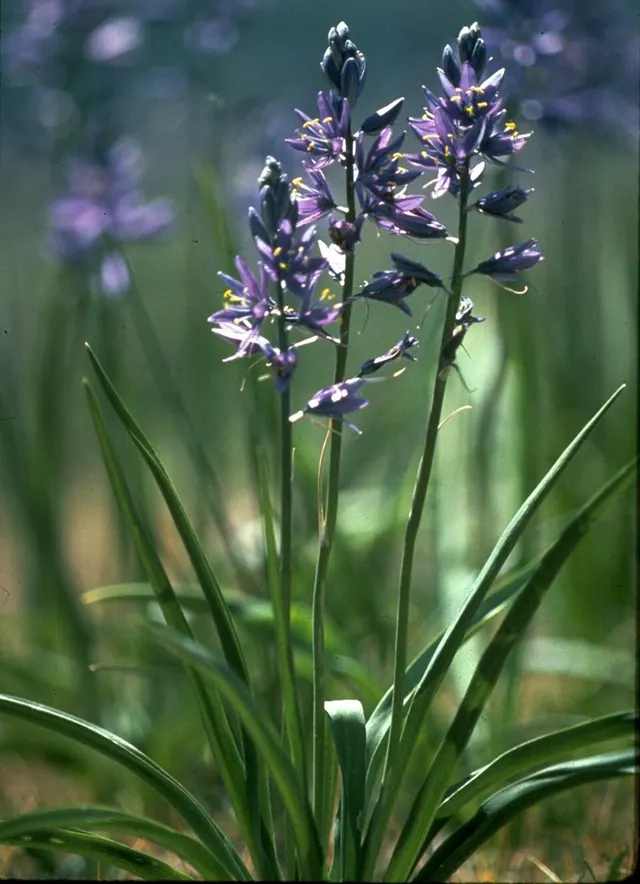
Photo: William & Wilma Follette @ USDA-NRCS PLANTS Database / USDA NRCS. 1992. Western wetland flora: Field office guide to plant species. West Region, Sacramento, California. · Public domain
Reference illustration. A photograph alone cannot confirm identification or edibility.
Expert identification is essential: poisonous death camas can occur nearby. Traditional bulbs require specialist preparation. Species group: identify an edible member; this entry does not mean every species in the genus is edible.
Habitat in British Columbia
Seasonally moist meadows and grasslands; common camas has a broader B.C. range, while great camas is concentrated on southeastern Vancouver Island and the Gulf Islands.
Ecosystem records
Coastal Douglas-fir (CDF); Coastal Western Hemlock (CWH)
UBC recorded ecosystems for the named taxa. Ecosystem records describe broad associations, not known patches or harvesting permission.
Timing and food-use notes
Not yet verified — no B.C. harvest months assigned. Weather, elevation and local conditions can change timing.
Verify the exact species, intended part and preparation with a qualified regional identifier. Months describe planning windows only.
Digging out bulbs, corms or whole roots removes or can kill the plant and can damage a patch. Leave wild plants in place unless access, stewardship and harvesting permissions are clear.
References
Repeated source URLs are combined above. A source may support more than one fact; it is not counted as independent verification twice.