Coastal Foraging in B.C.: Plan a Shoreline Learning Walk
Prepare for tides, access and observation before considering any coastal harvest.
By Forageberry · Published October 8, 2026 · Planning & learning guide
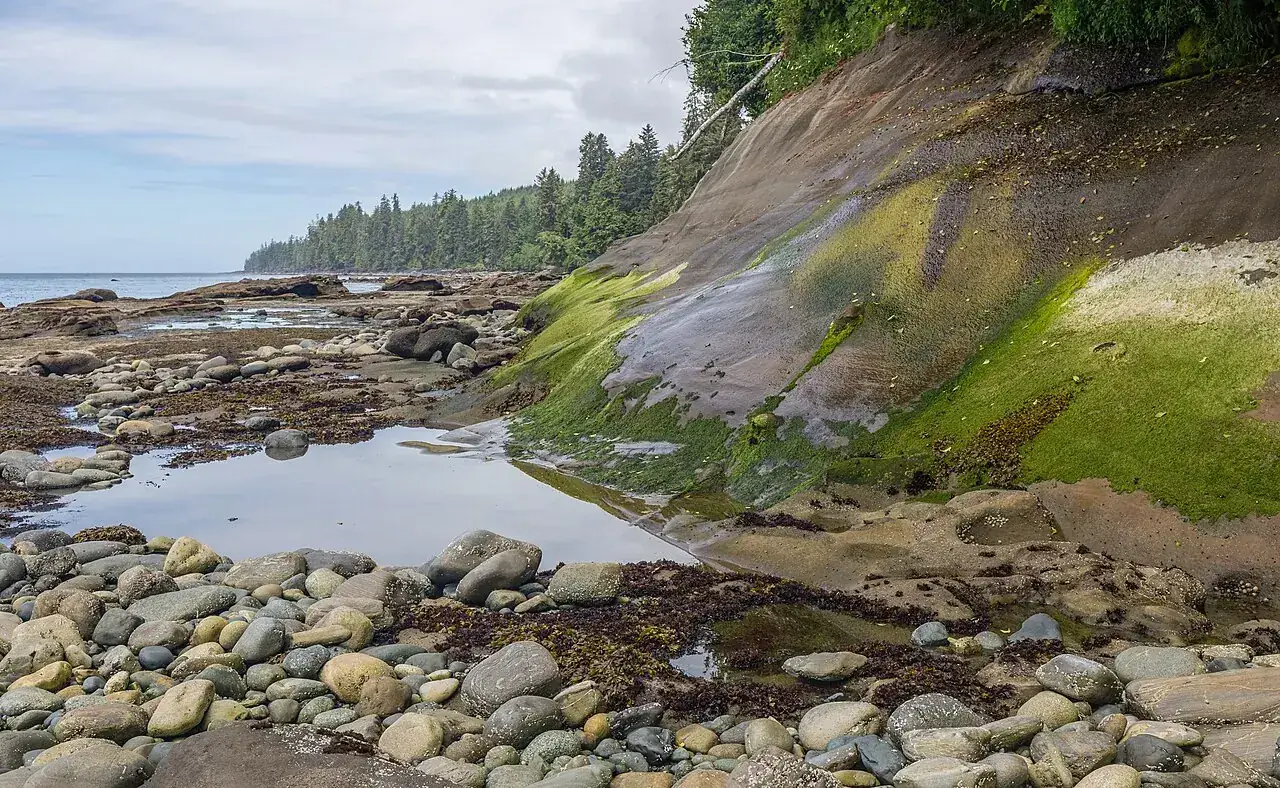
Make observation the first purpose
Coastal foraging in B.C. starts with understanding the shore. Plan an outing to observe and photograph shoreline plants and seaweeds rather than assuming anything you see can be gathered. Bring a notebook and record where each observation occurs without removing it. A successful walk can leave everything in place.
Use local tide information
Consult Canadian Hydrographic Service tide predictions for an appropriate station and check the dates, times and units. A low-tide time alone is not a complete route plan. Consider how you will return, changing water levels, weather and the shape of the shore. Choose a route where you can stay clear of places that could cut off your return.
Keep marine questions separate
The seasonal map includes marine entries, but a marine habitat note does not establish permission, food safety or a harvest limit. Seaweed gathering and shellfish harvesting require their own current checks. Do not apply a plant guide or a forest-picking rule to a shoreline collection. Resolve those questions with the responsible authorities before planning to harvest.
Bring the walk home in your notes
Photograph the wider habitat as well as the organism you want to research. Note the date and general location, then compare the observation with a suitable reference at home. Pack for the outing and keep a return time. Learning to read a familiar stretch of shore over several visits is a better first goal than filling a container.
Original Forageberry editorial content. This introductory guide does not establish identification, harvesting permission or food safety.