Morels
Morchella spp.
- Food part reported in sources
- Fruiting body
- B.C. seasonal planning window
- March, April, May, June
- Habitat
- Forests and some previous-year burns; species and sites differ.
An occurrence record or historical food-use report is not permission to harvest or proof of safe preparation.
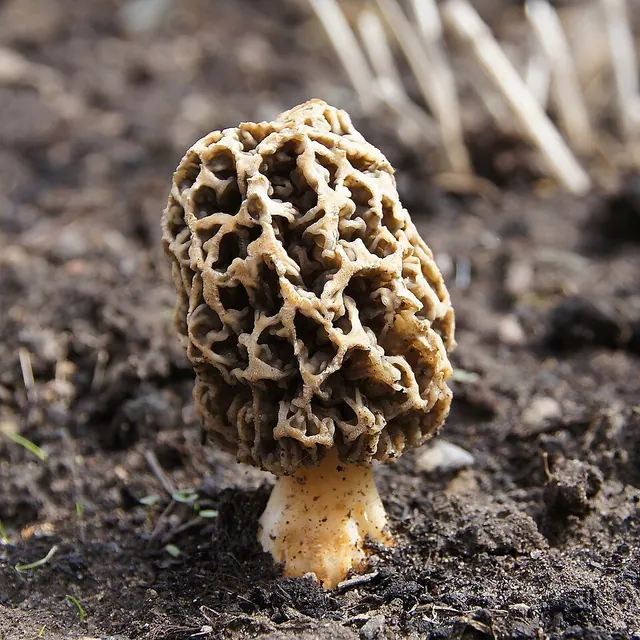
Photo: TOMMES-WIKI · CC BY-SA 3.0
Reference illustration. A photograph alone cannot confirm identification or edibility.
Spring planning window, later at elevation. Expert identification and cooking required.
Habitat in British Columbia
Forests and some previous-year burns; species and sites differ.
Ecosystem records
No verified terrestrial ecosystem association assigned.
Regional habitat guidance; no BEC species match. Ecosystem records describe broad associations, not known patches or harvesting permission.
Timing and food-use notes
March, April, May, June. Weather, elevation and local conditions can change timing.
Verify the exact species, intended part and preparation with a qualified regional identifier. Months describe planning windows only.
Features to Study
Study the ridged, pitted cap and a lengthwise section. The museum distinguishes true morels from brain-like or saddle-shaped fungi.
“Morel” covers several species. A burn-site observation does not identify the mushroom or establish that it is suitable to eat.
Study the whole organism with the linked regional reference. This is an introduction, not a complete identification key.
Comparisons & Common Confusions
Gyromitra and Helvella have different folded forms; Verpa can resemble a morel but attaches its cap differently. Work through the museum’s full comparison, including cap attachment and interior. Never decide from a distant cap photograph.
Plan the Outing
Use the seasonal window as a starting point for observation. Check current access, fire closures and terrain before considering a burn-area visit. The map does not verify a productive morel patch.
Handling & Kitchen Notes
The museum advises thorough cooking and warns against raw morels. Cooking applies only after reliable identification; it does not make a false morel acceptable. Keep uncertain specimens away from the food basket.
References
Repeated source URLs are combined above. A source may support more than one fact; it is not counted as independent verification twice.