Black huckleberry
Vaccinium membranaceum
- Food part reported in sources
- Fruit
- B.C. seasonal planning window
- August, September
- Habitat
- Dry to moist montane and subalpine forest and openings. Widely recorded in B.C.; local habitat and elevation matter more than the broad provincial label.
An occurrence record or historical food-use report is not permission to harvest or proof of safe preparation.
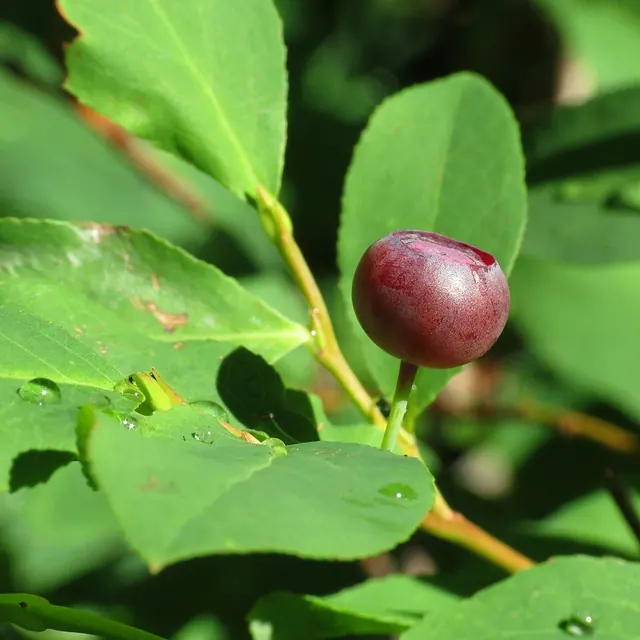
Photo: Katja Schulz from Washington, D. C., USA · CC BY 2.0
Reference illustration. A photograph alone cannot confirm identification or edibility.
Usually August–September; high sites ripen later.
Habitat in British Columbia
Dry to moist montane and subalpine forest and openings. Widely recorded in B.C.; local habitat and elevation matter more than the broad provincial label.
Ecosystem records
Boreal White and Black Spruce (BWBS); Coastal Mountain-heather Alpine (CMA); Coastal Western Hemlock (CWH); Engelmann Spruce–Subalpine Fir (ESSF); Interior Cedar–Hemlock (ICH); Interior Douglas-fir (IDF); Interior Mountain-heather Alpine (IMA); Mountain Hemlock (MH); Montane Spruce (MS); Ponderosa Pine (PP); Sub-Boreal Pine–Spruce (SBPS); Sub-Boreal Spruce (SBS); Spruce–Willow–Birch (SWB)
UBC recorded ecosystem zones. Ecosystem records describe broad associations, not known patches or harvesting permission.
Timing and food-use notes
August, September. Weather, elevation and local conditions can change timing.
Verify the exact species, intended part and preparation with a qualified regional identifier. Months describe planning windows only.
Comparisons & Common Confusions
Evergreen huckleberry retains glossy leaves; black huckleberry has deciduous, less lustrous foliage. Red huckleberry differs in its red fruit and conspicuously green twigs. Common names such as blueberry and huckleberry cover several species, so carry the scientific name into your reference search.
Plan the Outing
August–September is the current planning window. Allow time for mountain weather, access and a safe return rather than assuming a high-elevation berry trip is a simple extension of a lowland walk. A highlighted ecosystem can cover very different slopes and exposures.
Handling & Kitchen Notes
After positive identification, sort fruit into a clean container and keep it cool. A small portion can become a topping or part of a dessert without requiring a large harvest. If combining it with other berries, keep a note of each species rather than calling the mixture simply ‘wild berries’.
References
Repeated source URLs are combined above. A source may support more than one fact; it is not counted as independent verification twice.