Red huckleberry
Vaccinium parvifolium
- Food part reported in sources
- Fruit
- B.C. seasonal planning window
- June, July, August
- Habitat
- Western B.C. forests, including shrubs rooted on decaying wood and old stumps. Recorded in dry to moist lowland and montane woodland.
An occurrence record or historical food-use report is not permission to harvest or proof of safe preparation.
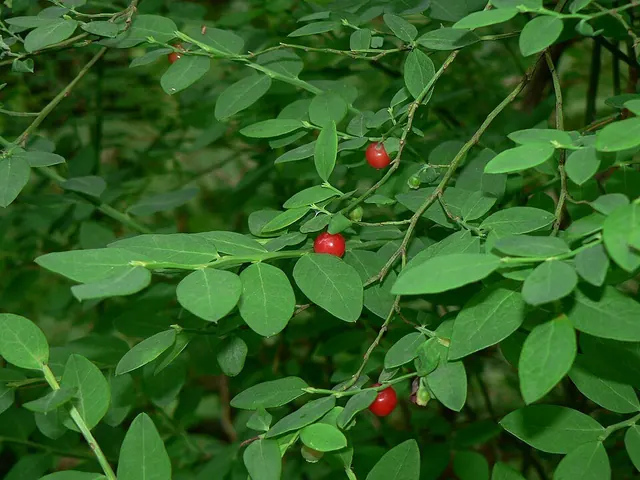
Photo: Walter Siegmund · CC BY 2.5
Reference illustration. A photograph alone cannot confirm identification or edibility.
Broad planning window: late June–August.
Habitat in British Columbia
Western B.C. forests, including shrubs rooted on decaying wood and old stumps. Recorded in dry to moist lowland and montane woodland.
Ecosystem records
Coastal Douglas-fir (CDF); Coastal Mountain-heather Alpine (CMA); Coastal Western Hemlock (CWH); Engelmann Spruce–Subalpine Fir (ESSF); Interior Cedar–Hemlock (ICH); Interior Douglas-fir (IDF); Mountain Hemlock (MH); Montane Spruce (MS); Sub-Boreal Spruce (SBS)
UBC recorded ecosystem zones. Ecosystem records describe broad associations, not known patches or harvesting permission.
Timing and food-use notes
June, July, August. Weather, elevation and local conditions can change timing.
Verify the exact species, intended part and preparation with a qualified regional identifier. Months describe planning windows only.
Features to Study
This shrub has bright green, distinctly angled branches and small oval leaves. The fruit is a round, bright red berry; the botanical account describes it as edible and often tart.
Leaves and branching structure are important evidence. A single red berry found on the ground gives very little identification context.
Study the whole organism with the linked regional reference. This is an introduction, not a complete identification key.
Comparisons & Common Confusions
Salmonberry fruit is a raspberry-like cluster rather than one smooth round berry. Black huckleberry and evergreen huckleberry differ in foliage and fruit colour. Other red-fruited plants also occur in B.C.; never treat red colour, a forest setting or an animal eating the fruit as an edibility test.
Plan the Outing
The guide uses late June–August as a broad planning window. Take time to observe the surrounding shrub and footing before reaching for fruit on an old stump. Wet, decaying wood can make a convenient-looking picking position unstable.
Handling & Kitchen Notes
After confirmation, keep small fruit in a secure container rather than a loose pocket or open bag. Its tartness can suit a small cooked sauce; taste and adjust only after identification is settled. Record your fruit-to-sugar ratio, and use a tested preservation recipe if you later want to can it.
References
Repeated source URLs are combined above. A source may support more than one fact; it is not counted as independent verification twice.