Lobster mushroom
Hypomyces lactifluorum
- Food part reported in sources
- Fruiting body
- B.C. seasonal planning window
- August, September, October, November
- Habitat
- Habitat details are not yet verified for this profile.
An occurrence record or historical food-use report is not permission to harvest or proof of safe preparation.
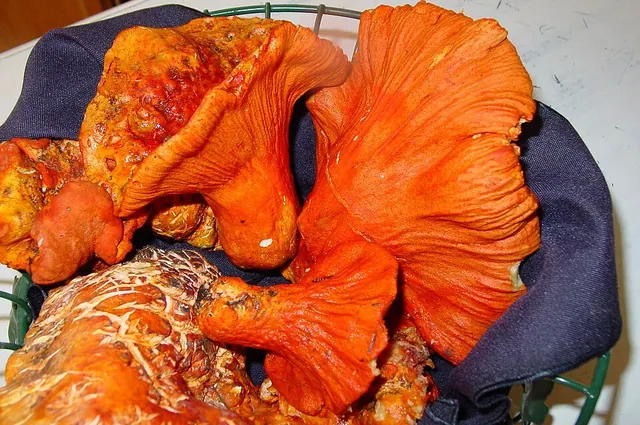
Photo: Sharksbaja · CC BY 3.0
Reference illustration. A photograph alone cannot confirm identification or edibility.
Expert mushroom identification and appropriate cooking are required. Review the source’s look-alikes and cautions.
Habitat in British Columbia
Habitat details are not yet verified for this profile.
Ecosystem records
No verified terrestrial ecosystem association assigned.
B.C. food-use reference; no verified ecosystem-zone match. Ecosystem records describe broad associations, not known patches or harvesting permission.
Timing and food-use notes
August, September, October, November. Weather, elevation and local conditions can change timing.
Verify the exact species, intended part and preparation with a qualified regional identifier. Months describe planning windows only.
Features to Study
The orange exterior is produced by a fungus growing on another mushroom, commonly a Russula host. The infection can distort the original gills.
The museum describes firm, white flesh within; condition is as important as a striking orange colour.
Study the whole organism with the linked regional reference. This is an introduction, not a complete identification key.
Comparisons & Common Confusions
Do not assume an orange mushroom is a lobster mushroom. Study the host form, surface and interior with the full reference. Old, soft or discoloured specimens are unsuitable candidates.
Plan the Outing
Use autumn weather and conifer habitat to plan a learning walk. Look carefully without disturbing surrounding soil; the map offers no verified patch location.
Handling & Kitchen Notes
The museum recommends cooking and notes individual reactions. Reject old specimens with deteriorated flesh or an unpleasant fishy smell. Positive identification comes before any cooking decision.
References
Repeated source URLs are combined above. A source may support more than one fact; it is not counted as independent verification twice.