Miner’s lettuce
Claytonia perfoliata
- Food part reported in sources
- See species reference
- B.C. seasonal planning window
- March, April, May
- Habitat
- Coastal bluffs and cool-season open ground.
An occurrence record or historical food-use report is not permission to harvest or proof of safe preparation.
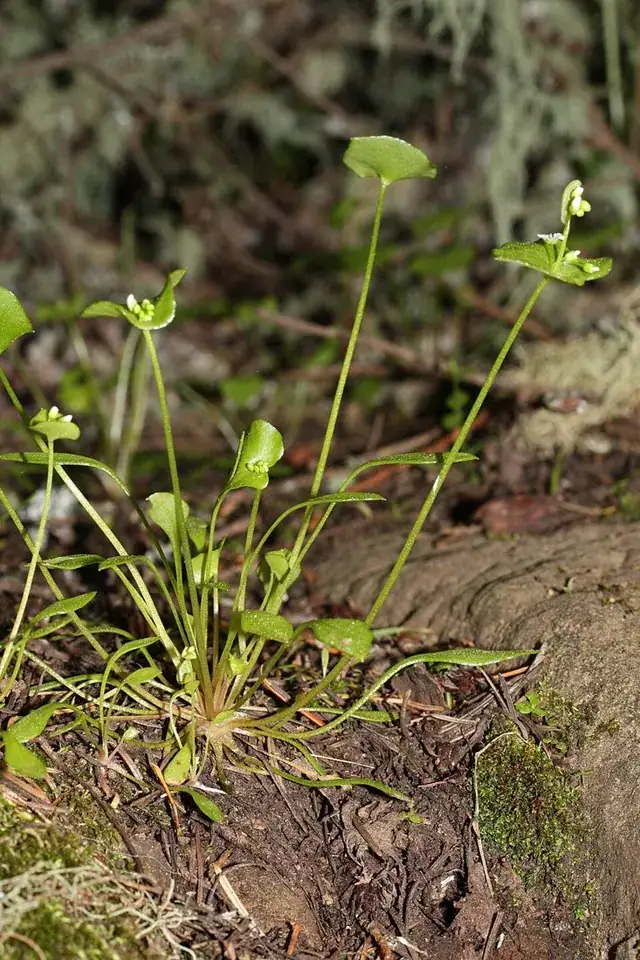
Photo: Walter Siegmund (talk) · CC BY-SA 3.0
Reference illustration. A photograph alone cannot confirm identification or edibility.
Typical spring window: March–May; dries out as weather warms.
Habitat in British Columbia
Coastal bluffs and cool-season open ground.
Ecosystem records
Bunchgrass (BG); Coastal Douglas-fir (CDF); Coastal Western Hemlock (CWH); Engelmann Spruce–Subalpine Fir (ESSF); Interior Cedar–Hemlock (ICH); Interior Douglas-fir (IDF); Ponderosa Pine (PP); Sub-Boreal Spruce (SBS)
UBC recorded ecosystem zones. Ecosystem records describe broad associations, not known patches or harvesting permission.
Timing and food-use notes
March, April, May. Weather, elevation and local conditions can change timing.
Verify the exact species, intended part and preparation with a qualified regional identifier. Months describe planning windows only.
Features to Study
Look for basal leaves and the paired stem leaves joined into a rounded disc beneath small pale flowers.
The botanical account describes a small annual in moist spring habitats. Photograph both the basal and flowering leaves.
Study the whole organism with the linked regional reference. This is an introduction, not a complete identification key.
Comparisons & Common Confusions
Siberian miner’s lettuce is a useful comparison with different leaf characters. Claytonia names cover several taxa, and the botanical account includes a conservation-sensitive subspecies. Do not treat every colony as a harvest opportunity.
Plan the Outing
Plan an observation visit during the spring window, especially in moist sites. Confirm the taxon and local conservation context before deciding whether a small harvest is appropriate.
Handling & Kitchen Notes
After identification and permission, wash leaves and keep them cool. Avoid collecting beside polluted runoff or where spray history is unknown. A salad recipe cannot compensate for uncertainty about the plant or site.
References
Repeated source URLs are combined above. A source may support more than one fact; it is not counted as independent verification twice.