Nootka rose hips
Rosa nutkana
- Food part reported in sources
- Fruit
- B.C. seasonal planning window
- September, October, November, December, January, February
- Habitat
- Forest edges, thickets, streambanks, river terraces and shore margins. Widely recorded in much of southern and central B.C.
An occurrence record or historical food-use report is not permission to harvest or proof of safe preparation.
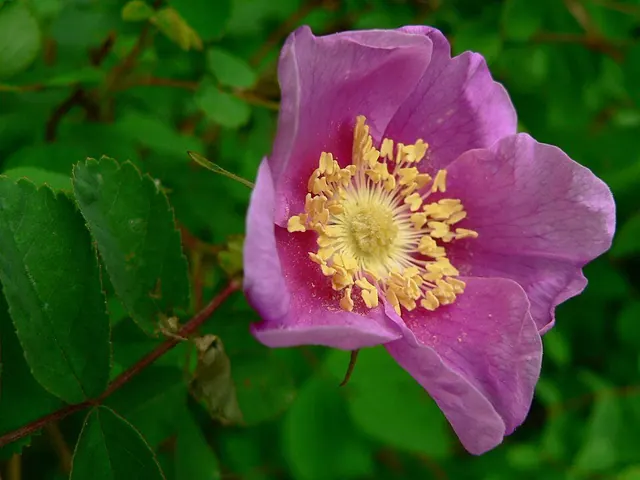
Photo: Walter Siegmund · CC BY 2.5
Reference illustration. A photograph alone cannot confirm identification or edibility.
Ripe hips from late September; may persist through winter. Persistence does not guarantee quality.
Habitat in British Columbia
Forest edges, thickets, streambanks, river terraces and shore margins. Widely recorded in much of southern and central B.C.
Ecosystem records
Bunchgrass (BG); Boreal White and Black Spruce (BWBS); Coastal Douglas-fir (CDF); Coastal Western Hemlock (CWH); Engelmann Spruce–Subalpine Fir (ESSF); Interior Cedar–Hemlock (ICH); Interior Douglas-fir (IDF); Montane Spruce (MS); Ponderosa Pine (PP); Sub-Boreal Pine–Spruce (SBPS); Sub-Boreal Spruce (SBS)
UBC recorded ecosystem zones. Ecosystem records describe broad associations, not known patches or harvesting permission.
Timing and food-use notes
September, October, November, December, January, February. Weather, elevation and local conditions can change timing.
Verify the exact species, intended part and preparation with a qualified regional identifier. Months describe planning windows only.
Features to Study
Look at the entire rose shrub: compound leaves, usually five or seven leaflets, large pink flowers and often paired prickles near the leaf nodes.
The red to purplish-red hip encloses numerous hairy seeds. The hip, leaves and stem features should be studied together.
Study the whole organism with the linked regional reference. This is an introduction, not a complete identification key.
Comparisons & Common Confusions
Other wild and cultivated roses also make hips. Do not identify Nootka rose from a red hip alone; the botanical key uses flowers, prickles and leaf characters. A garden escape can also have an unknown spray history even if its fruit resembles a wild rose.
Plan the Outing
The guide’s September–February window includes fruit that may remain attached into winter. Persistence does not mean good condition. Observe quality rather than taking every remaining hip, and keep hands protected when working around prickles.
Handling & Kitchen Notes
Use a species-specific preparation reference for separating the fleshy hip from seeds and irritating hairs. This profile does not supply a complete rose-hip processing method. If you want to share a sauce or tea recipe, explain the preparation and straining steps rather than listing ‘whole hips’ without qualification.
References
Repeated source URLs are combined above. A source may support more than one fact; it is not counted as independent verification twice.