Salal
Gaultheria shallon
- Food part reported in sources
- Fruit
- B.C. seasonal planning window
- July, August, September
- Habitat
- Lowland and montane forests, from dry sites to wetter woodland and bog margins. Common in western B.C.; much less common in the southeast.
An occurrence record or historical food-use report is not permission to harvest or proof of safe preparation.
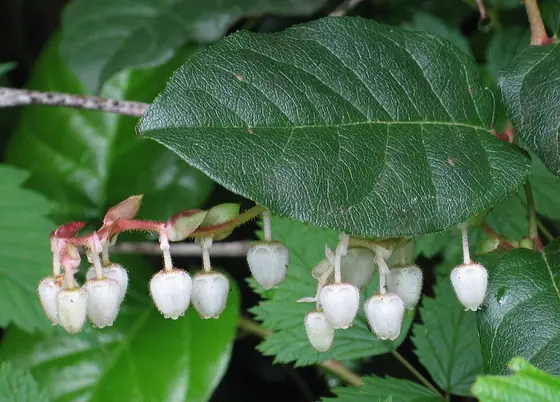
Photo: Robert Flogaus-Faust · CC BY 4.0
Reference illustration. A photograph alone cannot confirm identification or edibility.
Typical coastal fruit season: late July–September.
Habitat in British Columbia
Lowland and montane forests, from dry sites to wetter woodland and bog margins. Common in western B.C.; much less common in the southeast.
Ecosystem records
Coastal Douglas-fir (CDF); Coastal Western Hemlock (CWH); Interior Cedar–Hemlock (ICH); Interior Douglas-fir (IDF); Mountain Hemlock (MH)
UBC recorded ecosystem zones. Ecosystem records describe broad associations, not known patches or harvesting permission.
Timing and food-use notes
July, August, September. Weather, elevation and local conditions can change timing.
Verify the exact species, intended part and preparation with a qualified regional identifier. Months describe planning windows only.
Features to Study
Study the evergreen shrub before concentrating on its fruit. The leathery, alternate leaves have fine teeth; the spring flowers hang in small white or pinkish urns. Ripe fruit is dark purple to black.
A shrub’s leaves, flowering arrangement and attached fruit provide more useful evidence together than a handful of dark berries.
Study the whole organism with the linked regional reference. This is an introduction, not a complete identification key.
Comparisons & Common Confusions
Compare salal with evergreen huckleberry: both retain their leaves, but evergreen huckleberry has smaller, glossy, sharply toothed leaves. Neither dark fruit colour nor evergreen foliage is enough to identify a berry. Photograph leaf arrangement and fruit on the same branch for an identification discussion.
Plan the Outing
Use the July–September planning window as a starting point, then observe actual fruit development. An ecosystem highlight tells you where the plant has been recorded, not whether a particular trail has ripe fruit. Plan a short reconnaissance walk before committing to a collecting trip.
Handling & Kitchen Notes
Once identification is confirmed, carry fruit in a shallow container so the bottom layer is not crushed. Sort it before use and discard damaged or mouldy fruit. For a first kitchen experiment, make a small refrigerated fruit sauce rather than guessing a shelf-stable jam process. Record the amount of fruit and sweetness so you can repeat your version.
References
Repeated source URLs are combined above. A source may support more than one fact; it is not counted as independent verification twice.