Salmonberry
Rubus spectabilis
- Food part reported in sources
- Fruit
- B.C. seasonal planning window
- May, June, July, August
- Habitat
- Moist coastal forests, wet thickets, streambanks and swamp margins, from lowland to montane sites.
An occurrence record or historical food-use report is not permission to harvest or proof of safe preparation.
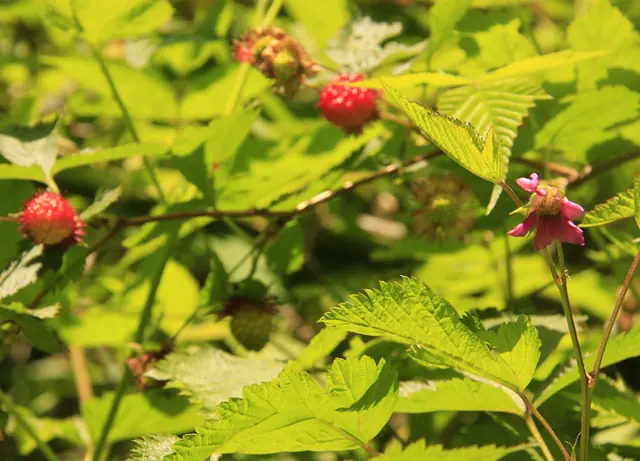
Photo: waferboard · CC BY 2.0
Reference illustration. A photograph alone cannot confirm identification or edibility.
June–July is a useful coastal starting point; some sites begin in May or extend into August.
Habitat in British Columbia
Moist coastal forests, wet thickets, streambanks and swamp margins, from lowland to montane sites.
Ecosystem records
Coastal Douglas-fir (CDF); Coastal Western Hemlock (CWH); Engelmann Spruce–Subalpine Fir (ESSF); Interior Cedar–Hemlock (ICH); Interior Douglas-fir (IDF); Mountain Hemlock (MH); Montane Spruce (MS); Sub-Boreal Spruce (SBS)
UBC recorded ecosystem zones. Ecosystem records describe broad associations, not known patches or harvesting permission.
Timing and food-use notes
May, June, July, August. Weather, elevation and local conditions can change timing.
Verify the exact species, intended part and preparation with a qualified regional identifier. Months describe planning windows only.
Features to Study
Salmonberry is a tall, often thicket-forming shrub. Look at the three leaflets, toothed leaf edges and conspicuous pink to reddish-purple flowers.
The raspberry-like fruit can be yellow, orange or deep red. Colour alone does not tell you whether it is ripe or establish its identity.
Study the whole organism with the linked regional reference. This is an introduction, not a complete identification key.
Comparisons & Common Confusions
Thimbleberry has broad, maple-shaped leaves and white flowers, rather than salmonberry’s three leaflets and colourful flowers. Photograph the shrub with fruit still attached; mixed berry thickets can contain more than one species.
Plan the Outing
The existing coastal calendar spans May–August, with June–July a useful starting point. Check the condition of the fruit rather than expecting every place to follow one date. At stream edges, choose a safe approach that does not require damaging banks or pushing through dense growth.
Handling & Kitchen Notes
Take a shallow lidded container and keep delicate fruit separate from heavier supplies. Plan to sort and use the harvest promptly. A small topping for yogurt or a cooked sauce lets you work with a modest amount of identified fruit; do not collect more simply to fill a recipe quantity.
References
Repeated source URLs are combined above. A source may support more than one fact; it is not counted as independent verification twice.