Trailing blackberry
Rubus ursinus
- Food part reported in sources
- Fruit
- B.C. seasonal planning window
- June, July, August
- Habitat
- Dry to moist open forest, clearings and thickets in the lowland and lower montane zones, especially southwestern B.C.
An occurrence record or historical food-use report is not permission to harvest or proof of safe preparation.
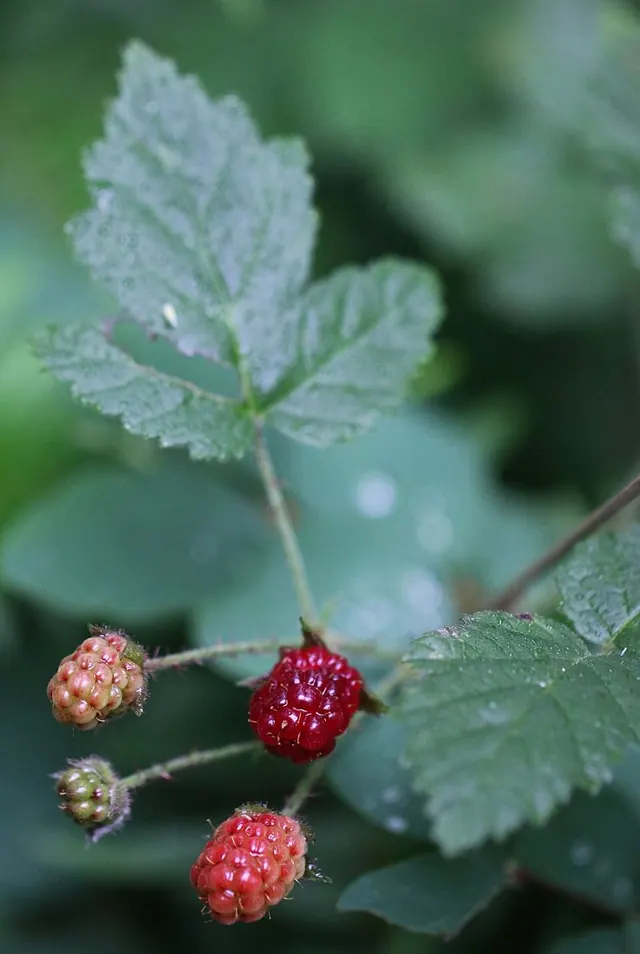
Photo: USFWS - Pacific Region · Public domain
Reference illustration. A photograph alone cannot confirm identification or edibility.
Usually earlier than Himalayan blackberry; broad summer window.
Habitat in British Columbia
Dry to moist open forest, clearings and thickets in the lowland and lower montane zones, especially southwestern B.C.
Ecosystem records
Boreal White and Black Spruce (BWBS); Coastal Douglas-fir (CDF); Coastal Western Hemlock (CWH); Interior Douglas-fir (IDF); Sub-Boreal Spruce (SBS)
UBC recorded ecosystem zones. Ecosystem records describe broad associations, not known patches or harvesting permission.
Timing and food-use notes
June, July, August. Weather, elevation and local conditions can change timing.
Verify the exact species, intended part and preparation with a qualified regional identifier. Months describe planning windows only.
Features to Study
Study the slender, trailing canes and fine prickles. Leaves usually have three leaflets; flowering shoots can rise above the sprawling main stems.
The fruit is a black cluster of drupelets. This native species has separate male and female flowers on different plants, so flowering does not guarantee fruit on every plant.
Study the whole organism with the linked regional reference. This is an introduction, not a complete identification key.
Comparisons & Common Confusions
Himalayan blackberry has coarser, taller arching canes and stronger hooked prickles. Salmonberry also has compound leaves, but its shrub form, flowers and fruit differ. A photograph of the whole growth habit is particularly useful when different Rubus species grow near one another.
Plan the Outing
The guide uses a broad June–August window, often earlier than Himalayan blackberry. Watch your footing around sprawling stems and check access before stepping off a path. Make your first visit an observation walk if you are still learning the species.
Handling & Kitchen Notes
Pack fruit in a shallow container and avoid mixing it with unconfirmed berries. Once identified, a small harvest can join shop-bought blackberries in the crumble idea on our Recipes page. Record the substitution and use your own photographs if you share your version.
References
Repeated source URLs are combined above. A source may support more than one fact; it is not counted as independent verification twice.