Sitka spruce tips
Picea sitchensis
- Food part reported in sources
- Tender new growth
- B.C. seasonal planning window
- March, April, May
- Habitat
- Habitat details are not yet verified for this profile.
An occurrence record or historical food-use report is not permission to harvest or proof of safe preparation.
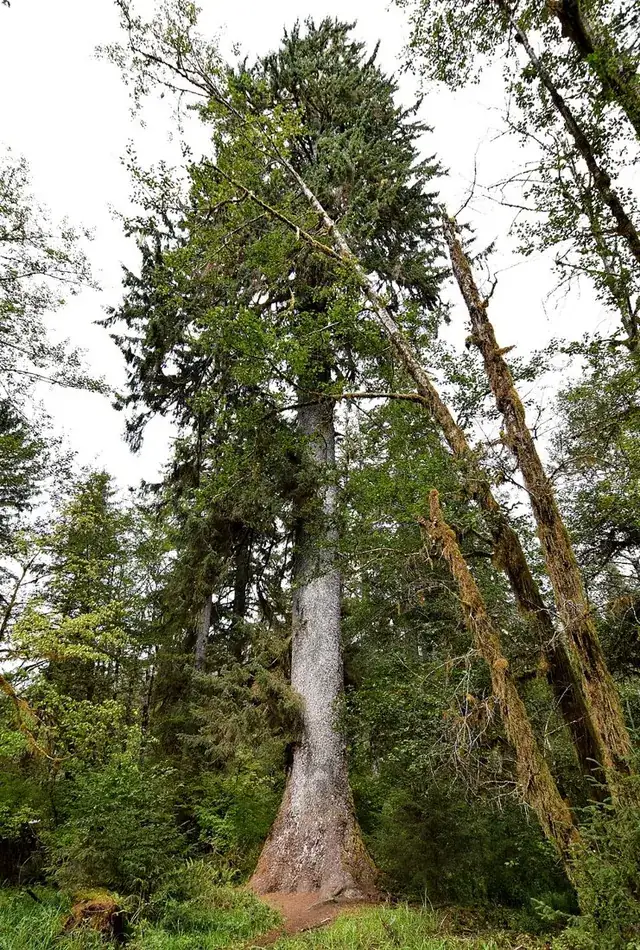
Photo: Graaf van Vlaanderen · CC BY-SA 4.0
Reference illustration. A photograph alone cannot confirm identification or edibility.
Identify the tree positively; do not confuse culinary conifers with poisonous yew. Follow permission and sustainable harvest guidance.
Habitat in British Columbia
Habitat details are not yet verified for this profile.
Ecosystem records
Coastal Douglas-fir (CDF); Coastal Mountain-heather Alpine (CMA); Coastal Western Hemlock (CWH); Engelmann Spruce–Subalpine Fir (ESSF); Interior Cedar–Hemlock (ICH); Mountain Hemlock (MH); Montane Spruce (MS); Sub-Boreal Spruce (SBS)
UBC recorded ecosystem zones. Ecosystem records describe broad associations, not known patches or harvesting permission.
Timing and food-use notes
March, April, May. Weather, elevation and local conditions can change timing.
Verify the exact species, intended part and preparation with a qualified regional identifier. Months describe planning windows only.
Features to Study
The botanical account describes sharp needles and hanging cones. Study mature foliage as well as the softer pale new growth.
Sitka spruce is a coastal tree associated with moist sites; a coastal location alone does not establish its identity.
Study the whole organism with the linked regional reference. This is an introduction, not a complete identification key.
Comparisons & Common Confusions
Compare the needles and cones with Douglas-fir and other spruces. This is a specific spruce profile, not permission to eat tips from any evergreen. A young tree without cones may require additional identification help.
Plan the Outing
Use local bud development alongside the spring planning window. Protect the main growing tip, avoid small trees and leave most growth intact. Confirm permission before taking any tips.
Handling & Kitchen Notes
Use a complete recipe specific to the identified tree and the young growth. Keep food preparation separate from identification. If sharing a syrup or infusion, describe storage and avoid unsupported long-term preservation claims.
References
Repeated source URLs are combined above. A source may support more than one fact; it is not counted as independent verification twice.