Bigleaf maple blossoms
Acer macrophyllum
- Food part reported in sources
- Blossoms
- B.C. seasonal planning window
- March, April, May
- Habitat
- Habitat details are not yet verified for this profile.
An occurrence record or historical food-use report is not permission to harvest or proof of safe preparation.
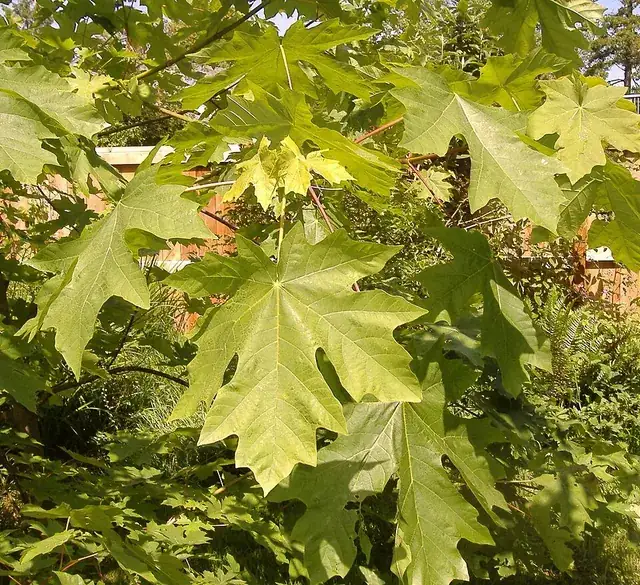
Photo: Angilbas at English Wikipedia · Public domain
Reference illustration. A photograph alone cannot confirm identification or edibility.
Identify the tree positively; do not confuse culinary conifers with poisonous yew. Follow permission and sustainable harvest guidance.
Habitat in British Columbia
Habitat details are not yet verified for this profile.
Ecosystem records
Coastal Douglas-fir (CDF); Coastal Western Hemlock (CWH); Interior Douglas-fir (IDF)
UBC recorded ecosystem zones. Ecosystem records describe broad associations, not known patches or harvesting permission.
Timing and food-use notes
March, April, May. Weather, elevation and local conditions can change timing.
Verify the exact species, intended part and preparation with a qualified regional identifier. Months describe planning windows only.
Comparisons & Common Confusions
Other maples share opposite leaves and paired winged fruits. Use the botanical description of Acer macrophyllum rather than applying this entry to every ornamental maple. Urban trees may also have an uncertain treatment history.
Plan the Outing
Plan around flowering stage in southwestern B.C., not just a month. Watch from accessible paths and avoid climbing or pulling branches. Leave flowers for pollinators and subsequent seed production.
Handling & Kitchen Notes
The recorded food part is the blossom. Use a species-specific culinary reference before preparing it, and explain which part you used if sharing a recipe. This page does not establish that all maple parts or species are interchangeable.
References
Repeated source URLs are combined above. A source may support more than one fact; it is not counted as independent verification twice.